01S-EPC
Solar EPC
Turnkey engineering, procurement and construction for industrial rooftops, ground-mounted plants, carports, electrical infrastructure and grid integration.
GENERATION
Delivery
Turnkey
Sites
Industrial + C&I
Build your own power.
Helios develops high-performance solar assets around how industry actually consumes electricity — from bill analysis and system design to approvals, EPC, commissioning and long-term operations.
For industrial businesses, electricity is a recurring operating expense exposed to tariff increases, demand charges and grid dependence. Helios converts part of that expense into a long-life productive asset.
We begin with actual bills, sanctioned demand, load profile, operating hours and existing power arrangements. Then we select the practical route: rooftop, ground-mounted captive, group captive or open access.
Turnkey engineering, procurement and construction for industrial rooftops, ground-mounted plants, carports, electrical infrastructure and grid integration.
On-site generation sized from bills, sanctioned demand and operating hours, reducing grid purchases without disrupting production continuity.
Customer-owned, captive and group-captive assets structured around lifetime energy cost, capital preference and the consuming facility's load.
Remote monitoring, preventive and corrective maintenance, cleaning, performance-ratio tracking and fault resolution over the asset life.
Battery and grid-interface systems that turn intermittent generation into dependable industrial power — firming, shifting and islanding.
Generation at the best site, consumption at yours. Group captive, third-party open access and banking structures — wheeled over the state network and settled to the 15-minute block.
Land acquisition, approvals, financing structure, engineering, construction and handover under one contract — from a blank parcel to an energised asset with a single accountable party.
Every viable project starts with how the facility buys and consumes electricity. Helios carries that evidence through design, approvals, construction, commissioning and long-term performance management.
We review twelve months of bills, interval data where available, sanctioned load, operating schedules and existing wheeling or open-access arrangements.
We model the appropriate capacity, site and ownership structure, setting out expected generation, capital requirement, savings, payback and key assumptions.
For on-site and remote projects, Helios coordinates site control, engineering, utility approvals, open-access registration and procurement through one accountable plan.
Procurement, civil and electrical works, grid integration, testing and synchronisation are delivered under a single-point EPC contract.
We monitor generation, maintain the asset and identify performance gaps so it continues delivering the savings for which it was built.
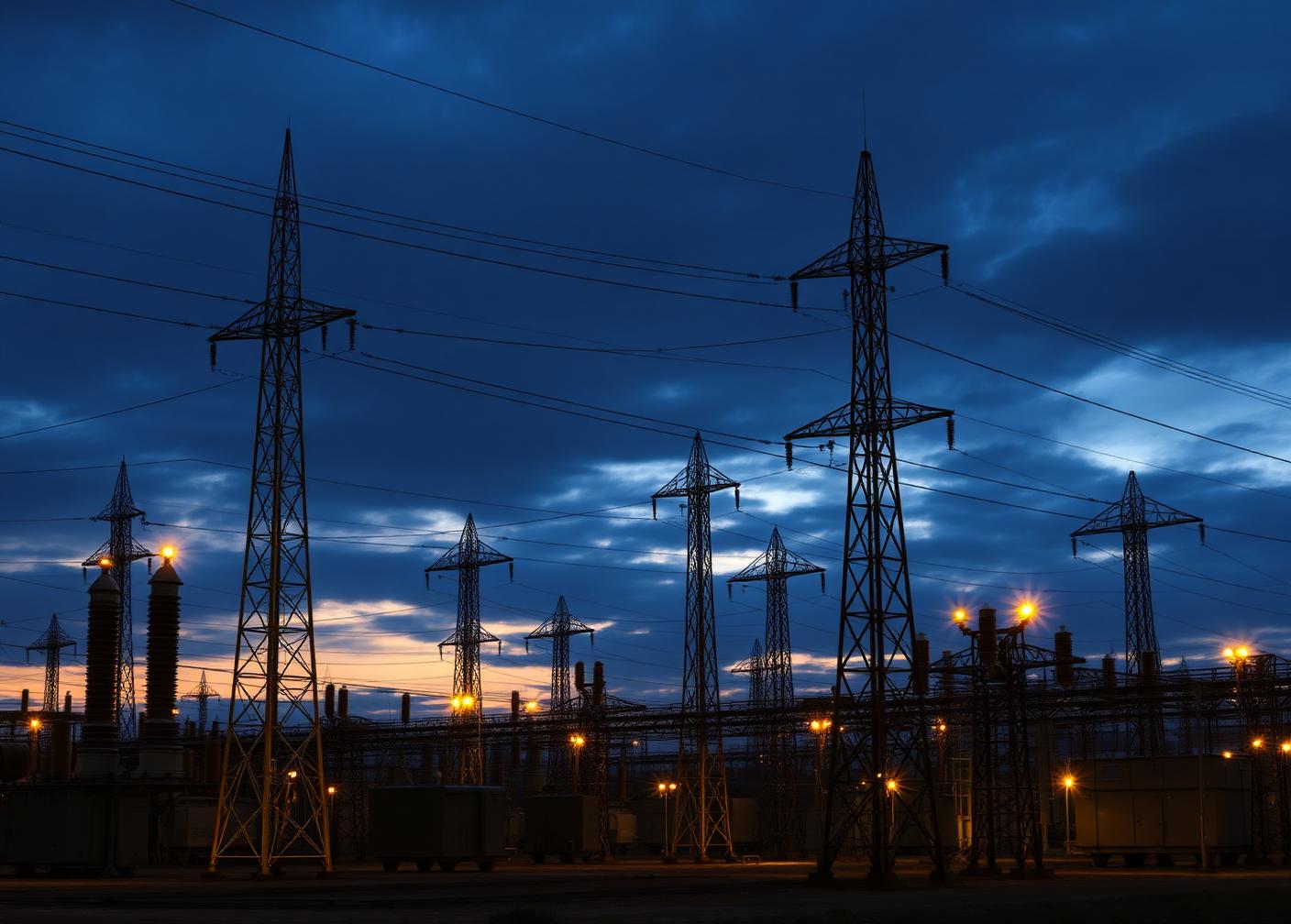
Wheeling is the difference between a rooftop and a portfolio. We hold the interconnection, the open-access registration and the settlement engine, so a facility with no land can still be powered by its own generation 400 km away.
26% equity, 51% consumption. We structure, build and administer the SPV so the consumer gets the tariff without owning the headache.
Generation at a remote high-irradiance site, wheeled over the state network to a facility that has no roof and no land.
On-site generation sized to the load curve, netted at the plant boundary with zero transmission loss.
Day generation banked with the utility, drawn at night, reconciled monthly against ABT meter data across every linked site.
Same engineering discipline at every tier — only the number of blocks changes.
Roof area is only one input. Load shape, state regulation, capital preference and existing supply contracts determine whether power should be generated on-site or wheeled from a remote asset.
You fund and own the plant; Helios delivers it on a turnkey basis. The result is direct ownership, long-term savings and a productive operating asset.
Businesses with available capital and a long operating horizon
Generation is installed at the consuming facility and used behind the meter, reducing the electricity purchased from the grid.
Facilities with shadow-free space and strong daytime consumption
Power is generated off-site and wheeled to one or more consuming locations under the applicable captive framework.
Large consumers, constrained roof space and multi-site requirements
Power from an off-site solar asset is supplied through the state network under the prevailing open-access framework.
Eligible consumers seeking renewable power without an on-site plant
Existing arrangements give us the data to compare today's landed tariff with a customer-owned or captive solar asset. The answer may be to retain, optimise or replace part of the present supply.
A panel is a component. A plant is a system. What Helios actually builds are complexes — arrays, converters, batteries, controllers and meters wired into a single governed machine with one control philosophy.
A factory that never sees a grid outage. Generation, storage, controls and backup act as one machine, arbitrating between four power sources in under 20 milliseconds.
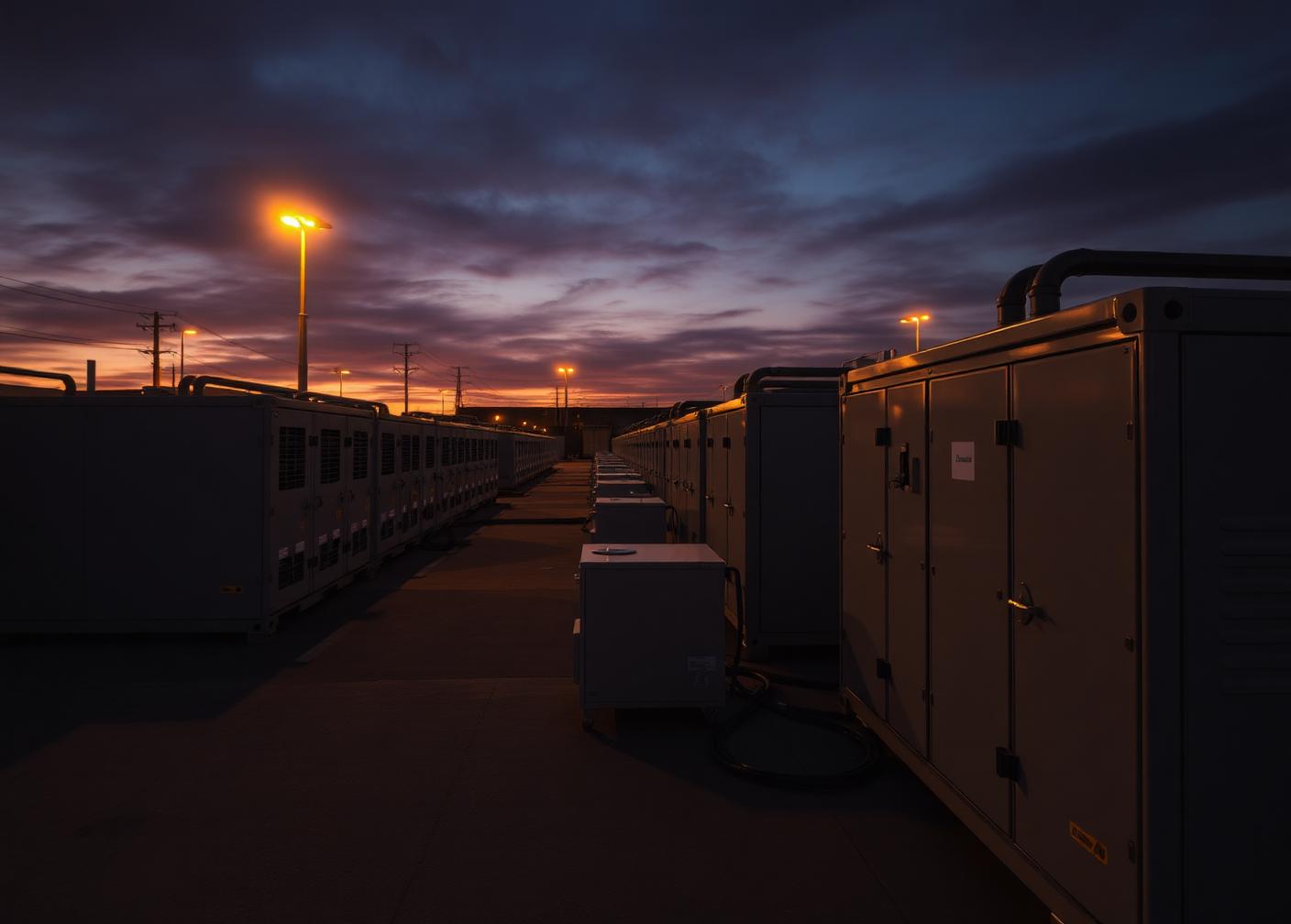
A remote generation park bound to many consuming facilities by contract, metering and software — one asset, many meters, one reconciled bill.
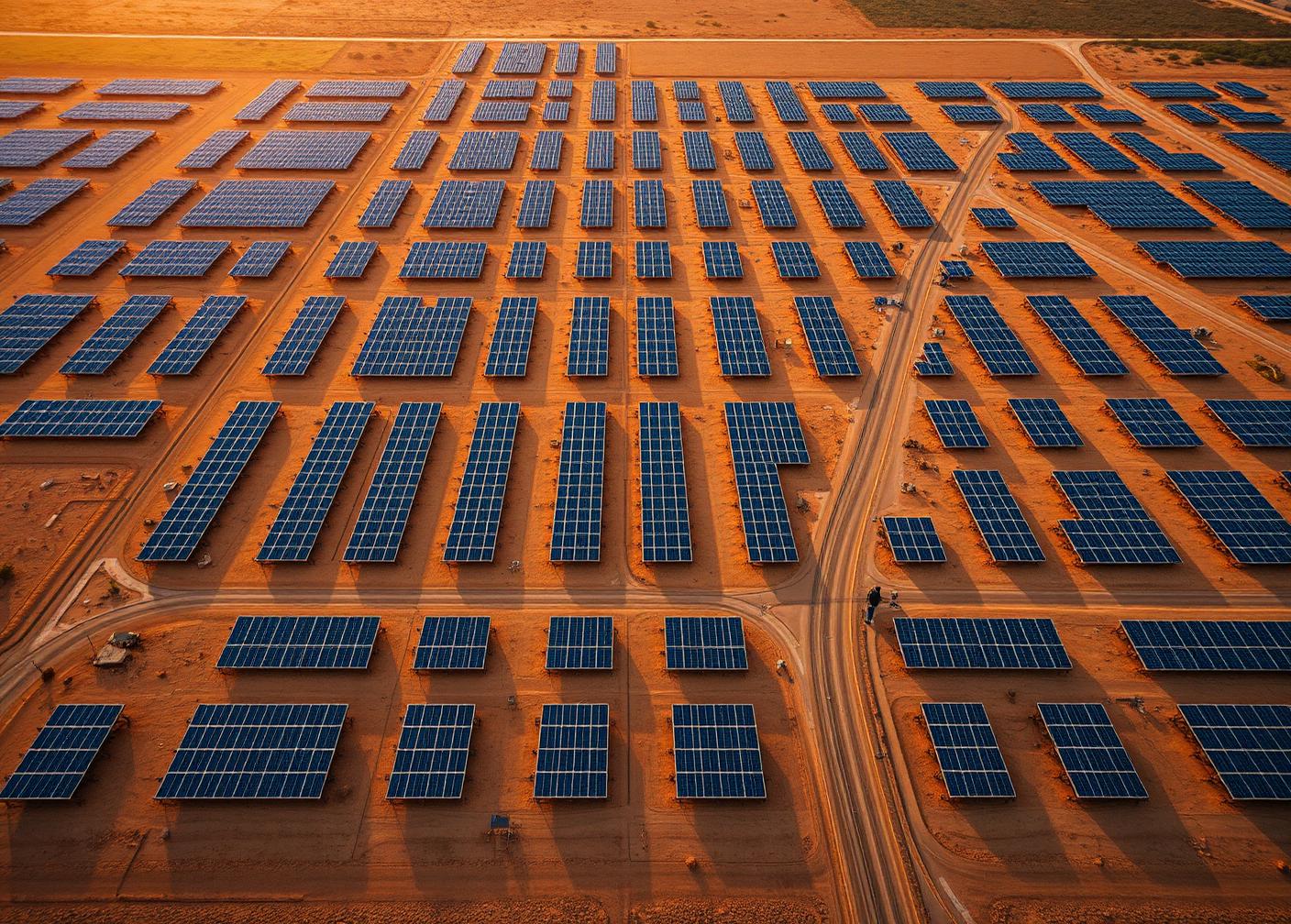
Technology selection is where LCOE is actually decided. We specify against measured field performance in Indian heat, dust and weak-grid conditions — then instrument every string so the assumptions are auditable for twenty-five years.
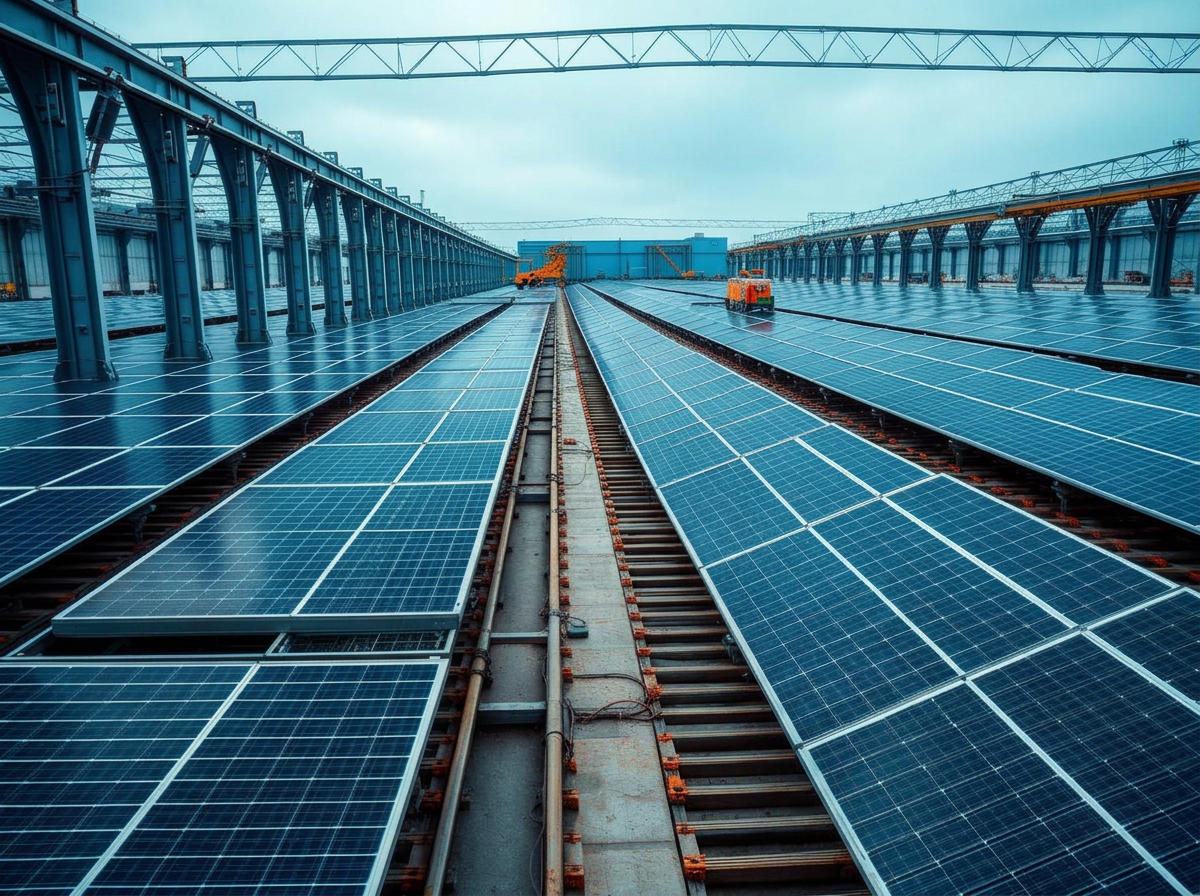
We deploy what is actually shipping at scale today, not what looked good three procurement cycles ago.
Structure decides yield as much as the cell does — and it decides whether the plant survives 25 monsoons.
SiC-based conversion, grid-forming behaviour and protection built for weak-grid Indian interconnects.
Chemistry, thermal design and BMS chosen for cycle economics at 40°C ambient, not for a lab datasheet.
Every asset is instrumented. The optimisation layer sits above generation, storage and load simultaneously.
Soiling, water scarcity and manpower are the real O&M costs in India. We engineer them out.
Representative project types across the Helios portfolio — generation, storage, evacuation and the land programmes that precede all of them.
Indicative project profiles — capacities describe the classes of asset Helios delivers.
Power flows down the chain; value flows back up it.
Aspirational targets, not achieved figures — they describe the system Helios intends to build.
Share twelve months of electricity bills and any existing wheeling, open-access or renewable-power arrangement. We will assess whether an on-site, captive or open-access project can deliver a stronger commercial outcome.